
NARANTSOGT SANJAA: “In Volatile Times, Policymakers Need Patience and Discipline—and Stability Depends on Institutional Quality”
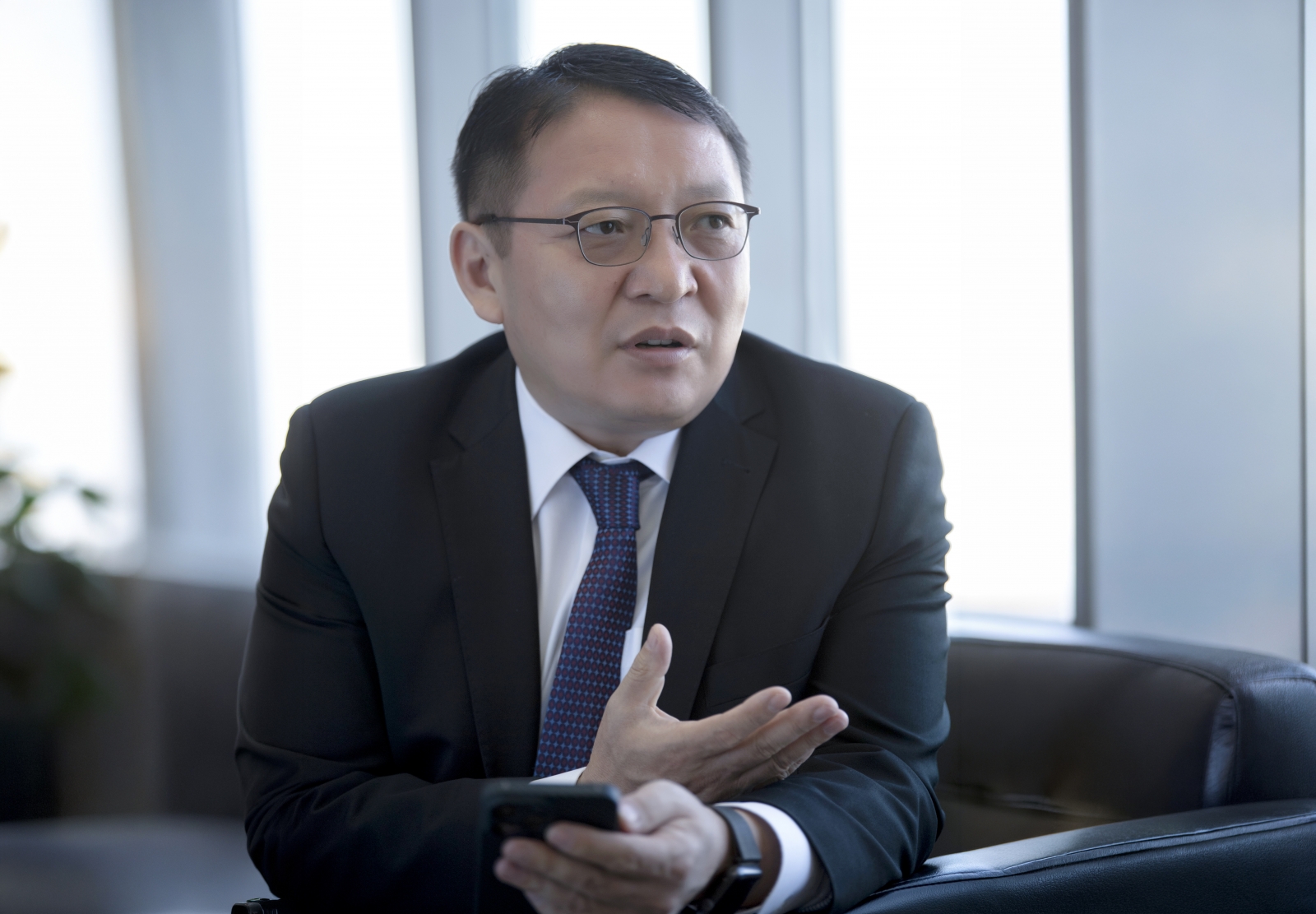
We spoke with Narantsogt Sanjaa, Governor of the Bank of Mongolia, about the reforms being implemented within the central bank and the broader financial sector.
You assumed office during a period of global economic volatility, domestic political uncertainty, and significant challenges. What are your key priorities in leading the central bank under such conditions?
The world is changing, and many of the underlying conditions we have long relied upon are shifting simultaneously. We are now operating in a new environment shaped by geopolitical tensions, political polarization, energy uncertainty, climate-related risks, rapid technological advancement, and volatile capital flows. In such an environment, we must adapt and build greater resilience. Since assuming office, my primary focus has been on strengthening institutional resilience. In practical terms, this means that the central bank cannot simply respond after a crisis has already occurred. Instead, it must proactively identify potential risks, build policy buffers and safeguards in advance, and maintain readiness with appropriate response options. This approach strengthens policy credibility and enhances systemic resilience. To that end, we have conducted a comprehensive assessment of our institutional capacity, identified priorities, and sequenced our reform agenda accordingly.
At the same time, central banks around the world are undergoing rapid transformation. Issues such as data architecture, artificial intelligence, cybersecurity, digital payment systems, and climate-related macro-financial risks are increasingly influencing price and financial stability. Central banks are adapting accordingly. In this context, we have adopted and begun implementing a medium-term strategy that goes beyond monetary policy, supervision, market operations, and payment systems. It also includes reforms in governance, organizational structure, technological capability, and the legal framework of the banking sector.
Any meaningful reform is closely linked to laws, regulations, and institutional rules. With that in mind, let’s move to the core of our discussion. What legal and regulatory reforms are needed as part of this broader reform agenda?
Any meaningful reform begins with improving the “rules of the game”—the legal and regulatory framework. I would highlight three key reform packages.
First, amendments to the Law on the Central Bank aim to clearly define the Bank of Mongolia’s primary mandate as maintaining price stability. These changes will eliminate ambiguity, strengthen independence, and improve transparency and accountability. They also seek to restrict quasi-fiscal financing, formalize mechanisms for fiscal-monetary coordination, and establish a legal framework for fully implementing macroprudential tools. In addition, the reforms aim to enable a more integrated approach to monetary policy, exchange rate policy, and financial stability policy. Furthermore, steps will be taken to gradually reduce the central bank’s accumulated losses and capital shortfall, thereby strengthening its financial independence and enhancing policy effectiveness in line with international standards.
Second, amendments to the Banking Law will focus on reducing ownership concentration and improving the legal environment for foreign bank penetration. Although banks have been publicly listed for five years, constraints in investment regulations and the limited capacity of the domestic capital market have hindered meaningful progress. To address this issue, we are considering increasing ownership limits—allowing a single shareholder to own up to 34 percent in systemically important banks and up to 51 percent in other banks. This would improve the ability to attract international investors and strategic partners, contributing positively to financial sector stability.
Third, it is necessary to strengthen the coordination between fiscal and monetary policy in stabilizing inflation. In practice, fiscal parameters often expand significantly during the parliamentary budget approval process, deviating from initial assumptions used in monetary policy projections. As a result, the central bank is often required to either revise its inflation targets or tighten policy, leading to tighter financial conditions. Excessive fiscal expansion increases inflationary pressures, while tighter monetary policy constrains private sector financing.
To mitigate these risks, we have developed legislative proposals aimed at strengthening institutional coordination mechanisms and submitted them to the relevant authorities.
Let’s turn to the legal objectives of the Bank of Mongolia and the policy measures designed to achieve them. The concept of a ‘polycrisis,’ referring to multiple, overlapping challenges occurring simultaneously, has gained increasing attention globally. How does the central bank assess its economic implications, and what guiding principles will it follow to maintain price stability under such conditions?
Economic shocks are a constant reality, but their frequency and scale have increased in recent years. In Mongolia, these shocks often manifest through commodity price fluctuations and capital flows, typically affecting the balance of payments. Depending on their impact on mining and related sectors, they also directly influence real economic activity. Ultimately, these developments are reflected in the financial sector, particularly in banks. The central bank continuously monitors these developments, updates its forecasts as new data becomes available, and determines appropriate responses through the Monetary Policy Committee meetings.
This raises an important question: how should the Bank of Mongolia respond as the nature and frequency of shocks continue to increase? One of the key lessons of recent years is that, in periods of heightened uncertainty and turbulence, the most important qualities for policymakers are patience and discipline. In such environments, there is constant pressure to react quickly and forcefully to emerging shocks. However, if the central bank responds inconsistently—through short-term, abrupt measures driven by emotion rather than analysis—policy effectiveness can be undermined. In most cases, economic instability does not stem from isolated unexpected events, but rather from weakened policy discipline, the accumulation of unresolved vulnerabilities, and a gradual erosion of confidence.
Looking at this issue from the perspective of inflation, price pressures in Mongolia are influenced by a wide range of factors, including commodity prices, fuel imports, fiscal expansion, logistics and transportation constraints, rapid credit growth, weather conditions such as droughts and dzud, and regional geopolitical developments. As such, monetary policy must clearly distinguish whether inflation is driven by demand or by supply-side factors. If inflation is fueled by domestic demand and economic overheating, the central bank will tighten its monetary policy stance decisively and without hesitation. However, when inflation arises from supply shocks—such as disruptions in the supply of fuel, meat, food, or other essential goods—an abrupt tightening of policy risks placing undue pressure on consumption, investment, employment, and business financing conditions.
In this context, maintaining the right balance is essential. The Bank of Mongolia will continue to implement its monetary policy tools alongside macroprudential measures to stabilize inflation expectations and moderate excessive credit growth. At the same time, it seeks to avoid creating unnecessary constraints on productive sectors of the economy.
Let’s turn to financial stability. How do you see Mongolia’s financial system evolving over the next decade?
Mongolia’s next stage of development requires a more diversified and resilient financial system. At present, the banking sector remains overwhelmingly dominant within the financial system. While this reflects the rapid growth and development of the banking industry, it also creates concentration risks. Looking ahead, Mongolia needs deeper capital markets, a stronger base of institutional investors, expanded sources of long-term financing, and a more competitive financial environment. Over the long term, greater integration with international financial markets will be essential for strengthening competitiveness, improving overall financial sector health, enhancing support for economic growth, and more effectively meeting the financial needs of households and businesses.
How do you assess the current state and outlook of the banking sector?
The banking sector is unique in that it serves nearly all segments of the economy. Commercial banks have successfully leveraged technology to introduce new products and improve efficiency, becoming one of the most productive sectors in the economy. From a regulatory perspective, maintaining stability and ensuring uninterrupted financial intermediation remain key priorities. We are working to strengthen supervision, enhance policy frameworks, and modernize regulatory tools.
As leading institutions, banks will play a central role in building a more resilient, transparent, and competitive financial system. Achieving this requires both liberalization and stronger regulation.
We are advancing risk-based supervision and improving regulatory instruments, while also promoting greater market openness. Increased openness will enhance competition and efficiency. In this regard, foreign investment—particularly foreign banks—can play an important role. Liberalization offers an opportunity not only to attract high-quality capital but also to introduce the best international practices in governance, risk management, technology, and competitiveness. At the same time, given the sensitivity of the sector, reforms must be implemented gradually and carefully to avoid instability.
You’ve frequently emphasized the importance of central bank independence. In Mongolia, this issue is also widely debated at the political level—could you elaborate on your perspective?
Sometimes, central bank independence is mistakenly understood as ‘an institution that is uncontrolled and independent from everyone,’ but in essence this is not such a concept. Central bank independence begins first and foremost with a very clear and concrete objective. In modern international practice, the primary mandate of central banks is price stability. If the main objective is not clearly defined, policy is pulled in multiple directions at the same time, becomes unstable and fragmented, and its effectiveness weakens. Therefore, it is necessary to clearly specify in law what the objective of this institution is. In the case of Mongolia, the 1996 Law on the Central Bank defined the objective as ‘stability of the togrog,’ which is sometimes interpreted ambiguously as referring either to ‘price’ or ‘exchange rate,’ creating certain risks in policy implementation and becoming one factor leading to the assessment that central bank independence is not sufficiently ensured. This should first be aligned with widely accepted international best practices.
After this, instrument independence—meaning the ability of the central bank to independently decide ‘when and which policy tools to use’ in order to achieve its legally mandated objective—should be understood as central bank independence. In other words, it means that central bank policy decisions must be professional, based solely on data, evidence, and analysis, and free from short-term political cycles and pressures. Only under such conditions can the central bank effectively fulfill its legally defined objective and achieve positive results for the economy. It is precisely to ensure such conditions that discussions are made about granting independence in areas such as finance and human resources.
On the other hand, independence must always go hand in hand with accountability, discipline, oversight, transparency, and professional principles. These must also be fully ensured. Therefore, independence should not be understood as isolating the central bank from the state or leaving it without any oversight. Rather, it is about creating the institutional conditions necessary to safeguard long-term macroeconomic stability through professional, rules-based, and credible policymaking.
You often speak not only about traditional central banking topics, but also about climate change, green finance, and technology. What is the reason for this?
In an economy like Mongolia’s, which is highly dependent on mining and agriculture, these issues are critically important. While climate change is not something a central bank can directly resolve, it poses significant risks—affecting food supply, collateral values, insurance exposure, and loan quality. In this sense, it is closely linked to both price stability and financial stability, making it an issue that the central bank cannot afford to overlook. Surely, the Bank of Mongolia does not replace the Government’s sectoral policies or broader strategies related to climate adaptation and mitigation. However, the central bank plays an important role in assessing climate-related macro-financial risks—particularly their impact on inflation and bank balance sheets—while preparing appropriate policy responses and contributing to the greening of the broader economy and financial system. We have already begun implementing concrete measures in this direction. For example, the Bank of Mongolia has established a dedicated unit responsible for sustainable development and green finance policy. In addition, we have extended the maturity limits for loans financing energy-efficient products and green vehicles to 60 months. As a result, monthly repayment burdens for green loans are expected to decline by around 40 percent, while access to such financing could increase by two to three times. We are also working toward increasing the share of green loans in the banking sector’s total loan portfolio from the current 5.7 percent to 10 percent by 2030.
At the same time, technological transformation is fundamentally reshaping the global financial system. Artificial intelligence, real-time systems, and big data are altering not only how financial systems operate but also the nature of the risks they face. As such, central banks must also prepare for this transition. Looking ahead, the Bank of Mongolia will undertake comprehensive technological modernization across its operations—from statistical data collection to licensing processes and regulatory functions. We have also initiated major upgrades in areas such as data processing for policymaking and real-time monitoring and supervision.
Finally, from your perspective, what philosophy and values do you consider to be important for the development of the financial sector?
Mongolia’s challenges extend far beyond today’s concerns around inflation, exchange rates, or interest rates. The real priority is to build institutions today that can withstand future shocks and serve as enduring anchors of stability. In this context, discipline, professionalism, transparency, and a forward-looking, long-term policy mindset are essential.
Ultimately, stability and long-term development are institutional outcomes. While short-term measures may at times help to ease market volatility and deliver immediate results, long-term economic resilience depends on whether institutions can preserve credibility through political cycles, commodity price fluctuations, and both external and internal shocks.
For the Bank of Mongolia, trust is the most valuable form of capital. Once public and market confidence is eroded, the cost of restoring stability becomes extraordinarily high. Conversely, if the central bank remains a credible and trusted institution, it can maintain consistent policy and strengthen the economy’s resilience under any circumstances.
The same principle applies to the broader banking and financial sector. It is not defined solely by economic statistics, monetary aggregates, or transaction volumes. At its core, finance is built on trust—on the relationships between people. Because the sector safeguards household savings, corporate assets, and national financial stability, it demands the highest standards of ethics, professionalism, responsibility, and discipline. Even as technology advances rapidly through artificial intelligence and digital transformation, the foundation of banking will always remain rooted in trust, integrity, and ethical conduct.
Thank you for the interview. I wish you success.