
Government Expresses Support for Issuing Special Government Securities to the Bank of Mongolia
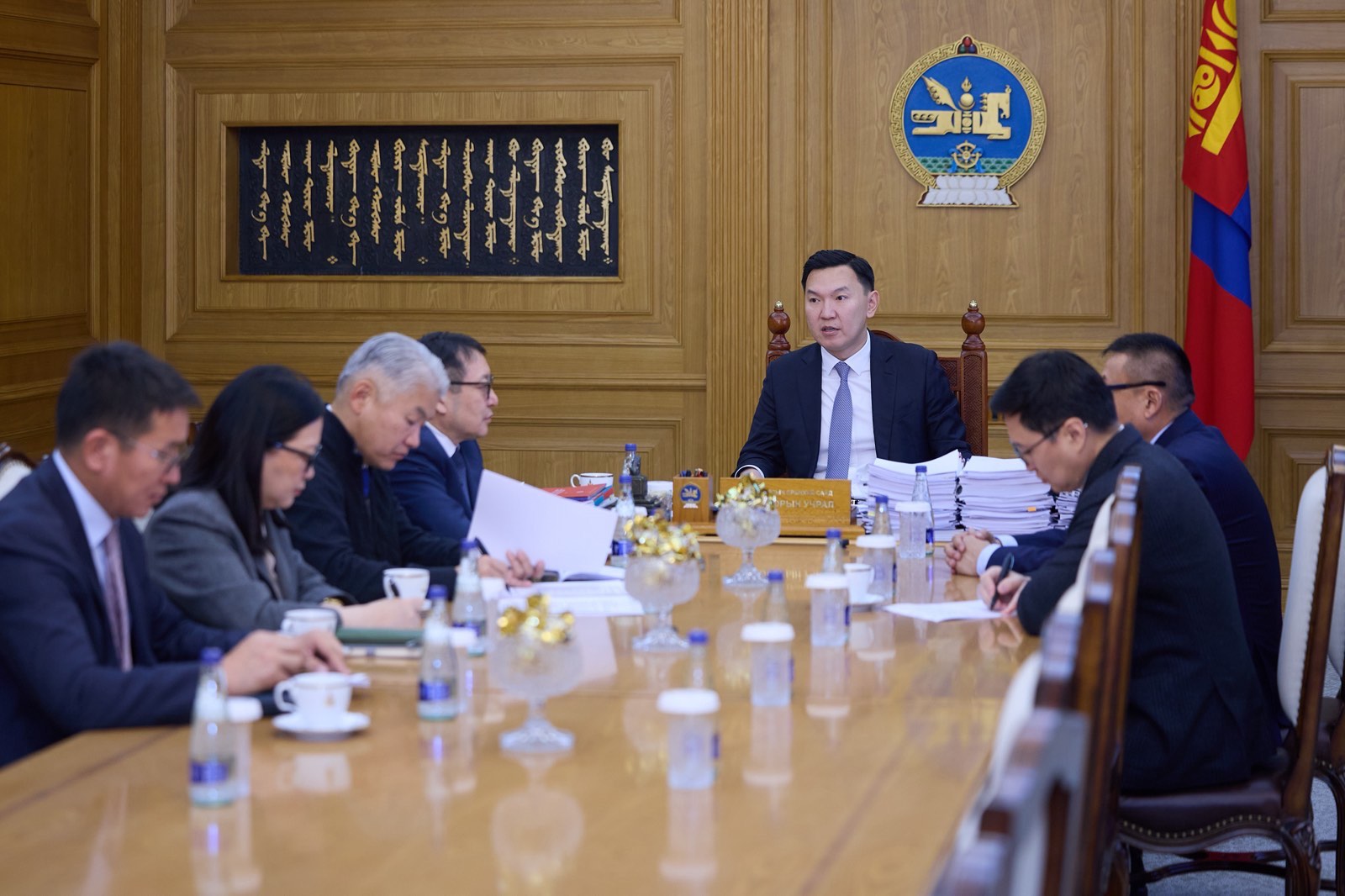
As parliamentary discussions began on the draft State Monetary Policy Guidelines for 2027, Prime Minister of Mongolia N. Uchral reviewed the draft and outlined his position on measures to reduce inflation, align monetary and fiscal policies, and address the Bank of Mongolia's accumulated losses.
The meeting was attended by B. Zayabal, Member of Parliament and Chairman of the Standing Committee on Economy; Z. Mendsaikhan, Minister of Finance; J. Enkhbayar, Minister of Economy and Development; and S. Narantsogt, Governor of the Bank of Mongolia.
As of October 2026, inflation in Mongolia had reached 13.4 percent, while the economy grew by 7.6 percent and household real incomes had declined by 4.8 percent. The Prime Minister highlighted that household real income growth had slowed in recent years and that rising inflation is adversely affecting people's purchasing power.
He noted that inflation had been within the Bank of Mongolia's target range in only five of the past 15 years, emphasizing the need for stronger coordination between monetary and fiscal policies to ensure price stability.
According to the Bank of Mongolia’s presentation, the outstanding balance of central bank bills stands at MNT 15.5 trillion, while accumulated losses over the 2012–2025 period have reached MNT 6.9 trillion. The Bank of Mongolia's capital shortfall amounted to MNT 4.8 trillion.
The presentation identified quasi-fiscal programmes implemented by the central bank as one of the factors contributing to its accumulated losses and the creation of excess liquidity in the financial market.
In particular, a total of MNT 15.8 trillion in quasi-fiscal financing had been provided since 2012. This included mortgage financing, price stabilication measures and other quasi-fiscal programmes.
During the 2012–2016 period, MNT 15.8 trillion was allocated to the following programmes and initiatives:
- Price Stabilisation Programme;
- Mortgage Financing Programme;
- “Sain” (“Good”) programmes;
- Programme to Improve the Asset Quality of Commercial Banks;
- Loans to the Deposit Insurance Corporation;
- Housing Supply Support Programme; and
- Financing of the Erdenes Tavan Tolgoi bond.
Furthermore, since the introduction of the fiscal rule limiting the budget deficit to 2 percent of GDP, the cumulative amount of budget deficits in excess of this threshold has reached MNT 12.6 trillion.
The draft State Monetary Policy Guidelines for 2027 proposes the issuance of long-term special government securities to address the Bank of Mongolia's accumulated losses.
In this regard, the Prime Minister expressed the Government's support for the Bank of Mongolia's proposal to issue special government securities and allocate them to the Bank of Mongolia.
Under the proposal, the Government would issue special securities worth MNT 1.5 trillion annually, with a maturity of 25 years. The securities would have a five-year grace period, during which no principal or interest payments would be required. Accordingly, no direct expenditure would be incurred from the state budget during 2027–2031.
According to the Bank of Mongolia's estimates, if this measure is not implemented, the inflationary pressures will increase recurrent budget expenditure by an average of MNT 1.3 trillion from 2032 onwards. By contrast, if the special securities are issued, annual budget expenditure from 2032 is projected to amount to approximately MNT 0.5 trillion.
The Prime Minister also expressed support for the Bank of Mongolia's plan to gradually reduce its intervention in the foreign exchange market and transition towards a role focused on facilitating and regulating market operations.
This measure would not only strengthen the Bank of Mongolia's capital position but also support the development of new financial derivatives in the market. The Prime Minister further emphasized that quasi-fiscal activities conducted through the central bank should be prohibited by law. In this regard, he instructed the Ministry of Finance to work jointly with the Bank of Mongolia to prepare the necessary draft legislation and establish an appropriate legal framework.
The draft State Monetary Policy Guidelines for 2027 also includes measures aimed at addressing the six key channels contributing to inflation and strengthening the effectiveness of monetary policy.
These measures include establishing a legal framework for coordination between fiscal and monetary policies, transferring responsibility for quasi-fiscal programmes to the Government, improving the regulatory framework for the foreign exchange market, supporting supply chain financing, and strengthening governance and developing financial instruments in the banking sector.
The Prime Minister stated that the Government would continue to strictly adhere to the fiscal rule of keeping the budget deficit within 2 percent of GDP.